Cash float & extraordinary transactions
Modified on Wed, 18 Feb at 3:56 PM
At the beginning, watch the linked video. It explains step by step how expenses and cash deposits are carried out correctly. The video provides an initial overview of the most important procedures and demonstrates the individual processes clearly.
Afterwards, you will find detailed written step-by-step instructions.
TABLE OF CONTENTS
- What is a cash float?
- Fixed cash float suggestion
- Record cash float suggestion as income
- Flexible cash float
- Record cash withdrawal
- Photo function for cash withdrawals
What is a cash float?
In this article, we explain how you can enter the cash float before opening the register. By cash float, we mean the amount of cash you want to start the day with when opening the register. In our POS system, you can adjust the cash float at any time. However, you can also program a fixed cash float suggestion. We also explain how to record income or expenses from extraordinary transactions using the cash balance in your register.
Fixed cash float suggestion
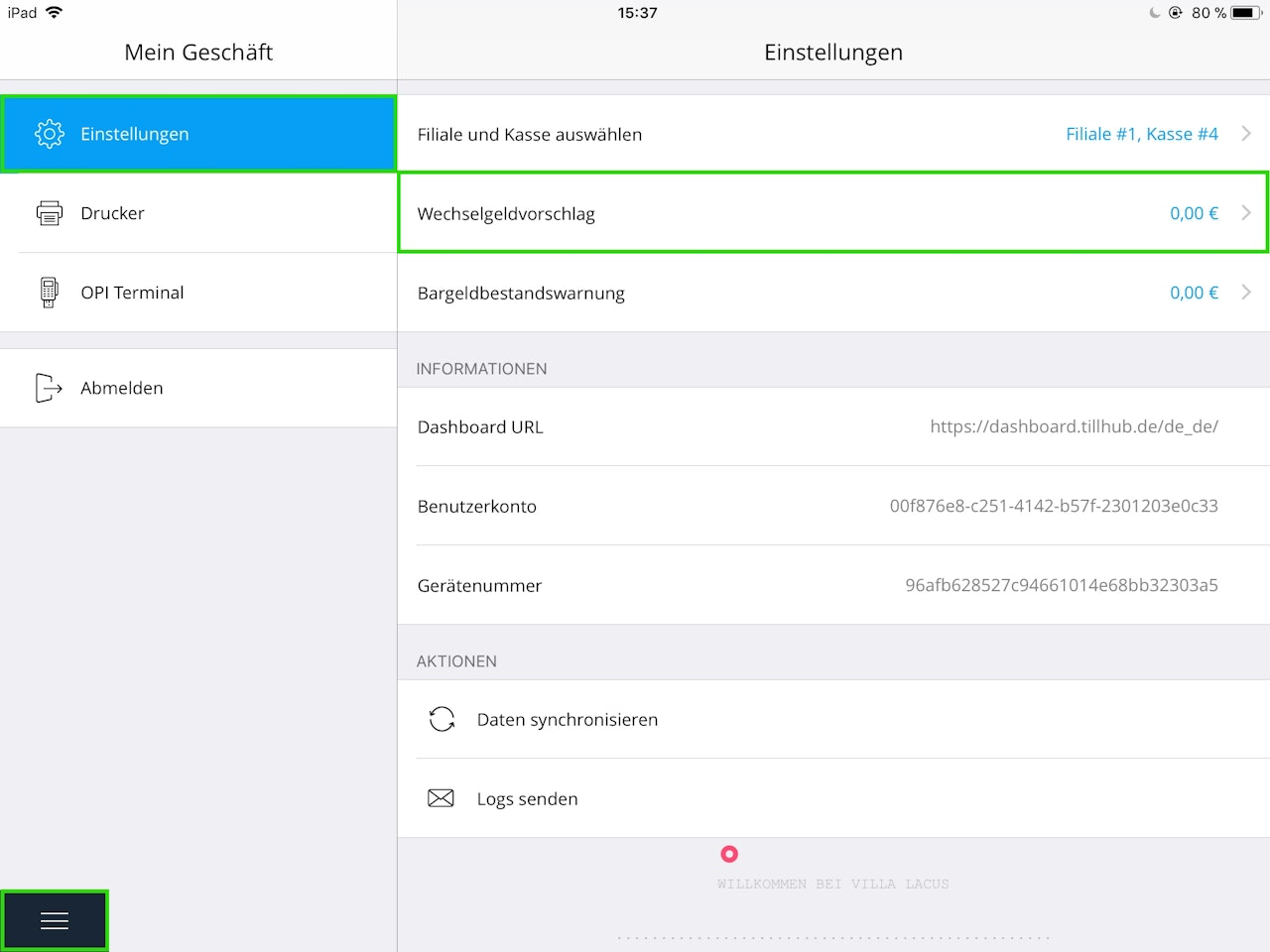
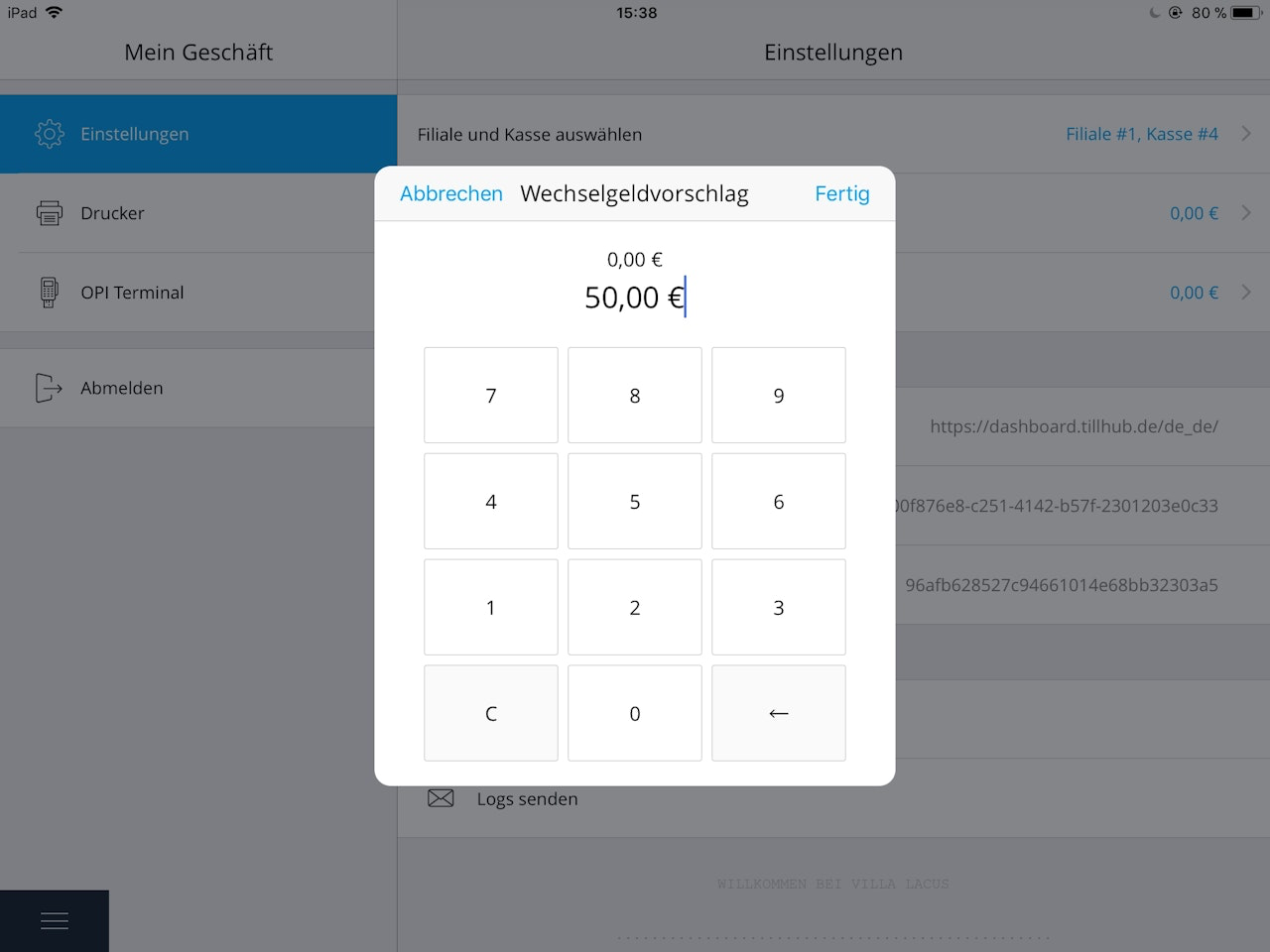
If you want to start each day with a fixed cash float, you can enable this via the “Cash float suggestion” setting. To activate and edit this option, go to the Tillhub App main menu, tap “Settings,” and then tap “Cash float suggestion” on the right-hand side. Enter the desired amount that should remain fixed in the register—even after a register closing—and confirm by tapping “Done.” Now, when you're asked during the register closing whether you want to take cash to the bank, the system will no longer suggest the entire cash balance in your register as the payout amount, but only the current balance minus the fixed float you set here.
Note: If you want to start each day with the same float, this setting helps save time during the closing process!
Of course, you can still adjust the amount you want to take to the bank during the register closing, giving you maximum flexibility. More information on how to perform a “Register closing” can be found in a separate section: How do I perform a register closing?
Record cash float suggestion as income
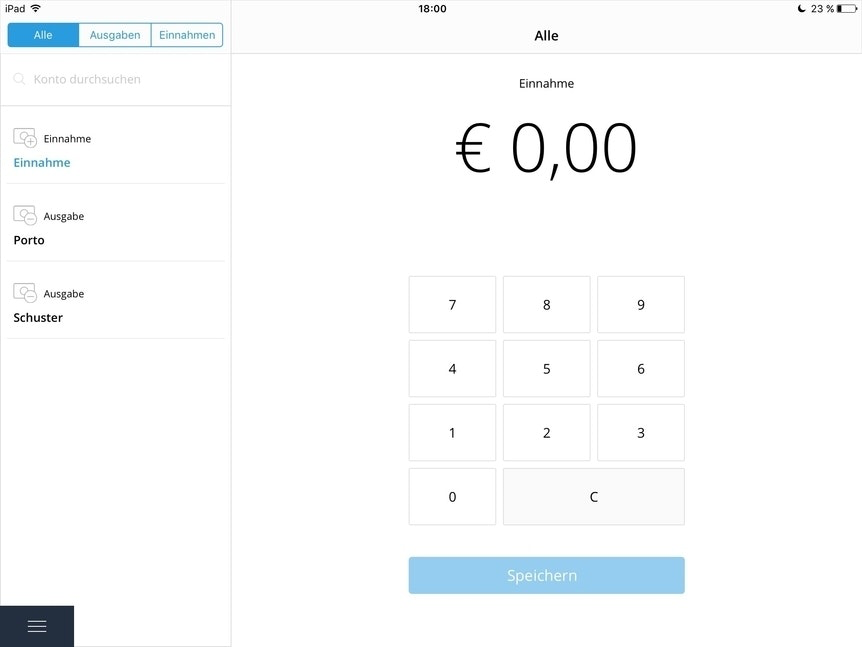
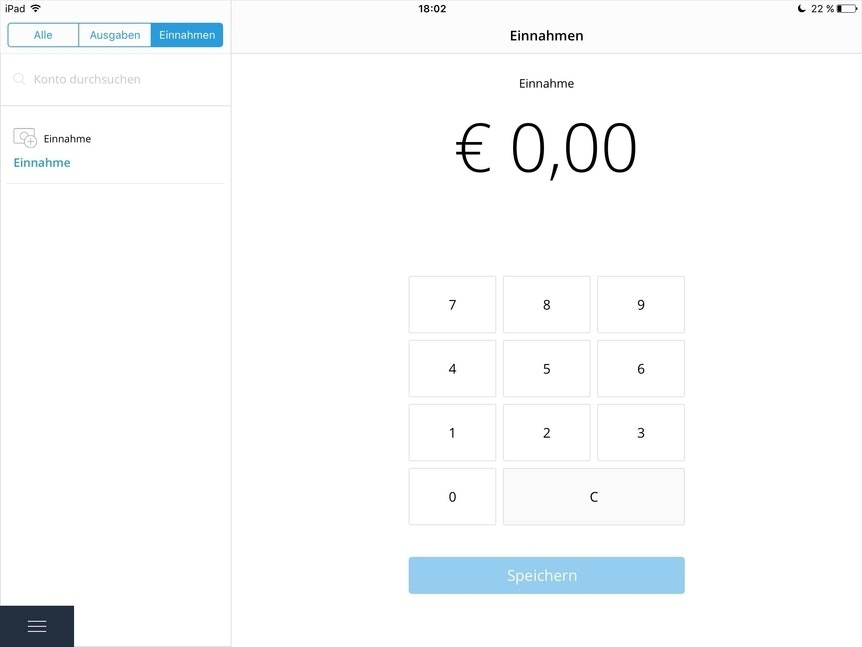
Entering a fixed cash float in the settings does not automatically create an income. This must be done in a separate step, either when opening the register or later during daily operations. First, tap the main menu icon at the bottom left and navigate to "Expenses & Deposits." A new window opens. On the left side, all your expense and deposit accounts for extraordinary transactions are listed. If you want to display only your income accounts, click the “Income” tab. If you can't immediately find the desired account, use the “Search account” field by typing the account name using the keyboard. Once you've selected the desired account, use the keypad on the right side to enter the float amount to be recorded. Use “C” to correct the entry if needed, or complete the process by tapping the blue "Save" button.
Flexible cash float
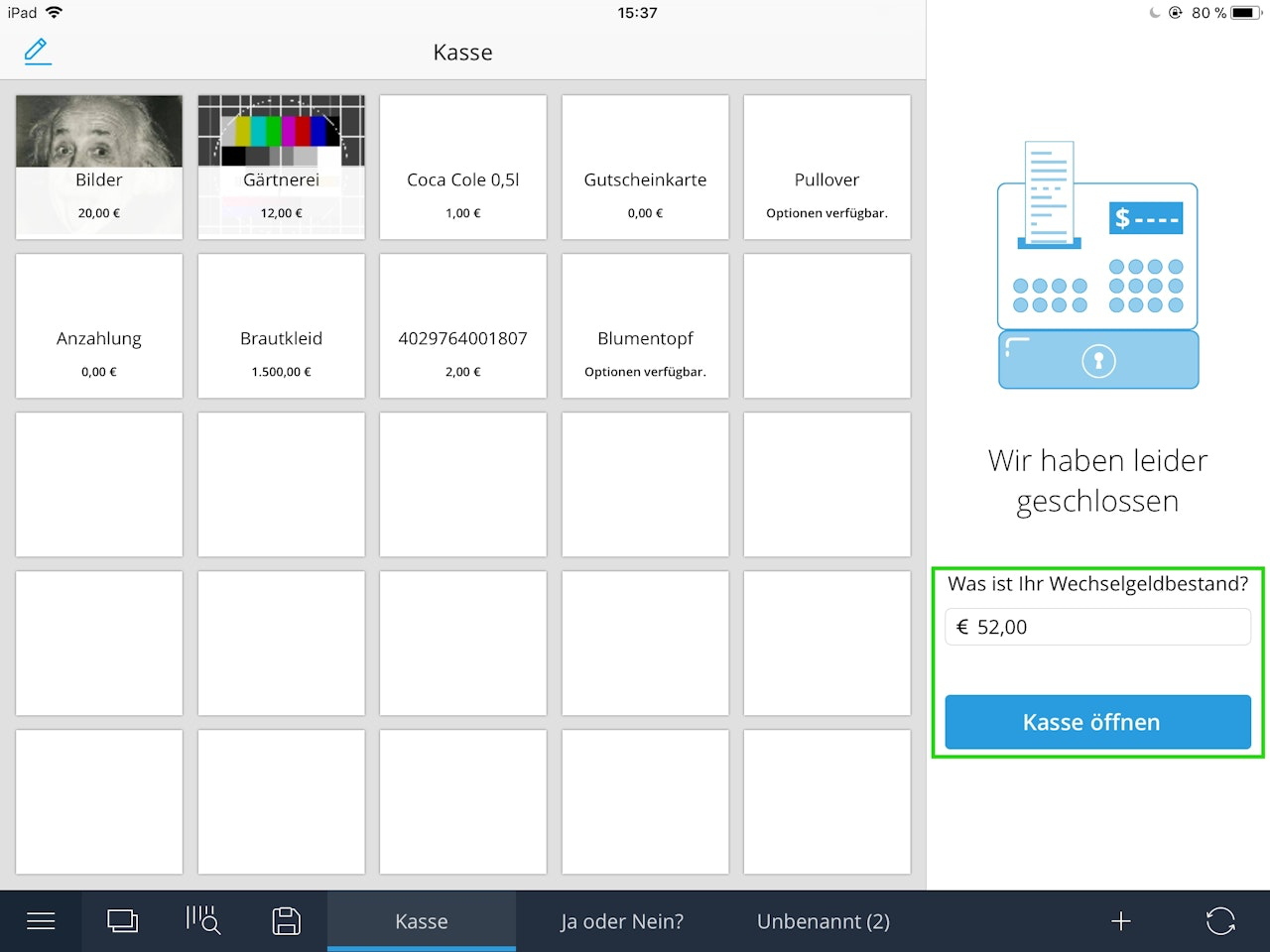
When you open your register after a closing and see the tile view, you'll find a field at the bottom right labeled "What is your cash float?" The opening balance suggested there corresponds to the ending balance from the last register closing. If you're using the register for the first time or if you've taken all the cash to the bank after a closing, the amount displayed will be 0.00. Of course, you can manually enter a different float amount here. Tap the designated field and enter the desired amount.
If you enter a lower float than the expected amount from the previous closing, the difference is automatically recorded as an expense. The app will automatically take you to the “Expenses & Deposits” menu, where you can select one of your expense accounts. If you enter a higher float than expected, the surplus will be automatically recorded as income. Again, you’ll be redirected to “Expenses & Deposits,” where you can select the appropriate income account.
Record cash withdrawal
If you want to record a cash withdrawal unrelated to float entry —e.g., to pay a postage bill—start by tapping the main menu icon at the bottom left and navigate to “Expenses & Deposits.” A new window opens, listing all your expense and deposit accounts for extraordinary transactions on the left. To show only your expense accounts, click the “Expenses” tab. If you can’t find the desired account right away, use the “Search account” field by typing the name using the keyboard. Once you select the account, use the keypad on the right side to enter the withdrawal amount. Correct your entry with “C” if needed, and complete the transaction by clicking the blue "Save" button. Our photo function allows you to document your transactions even more accurately. How to use this feature is explained in the next article: Photo function for cash withdrawals
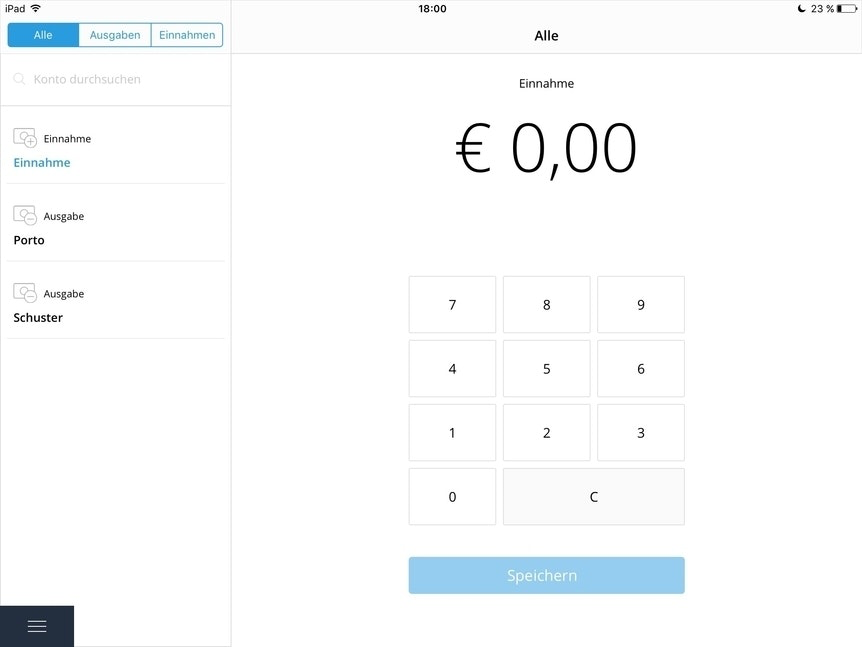
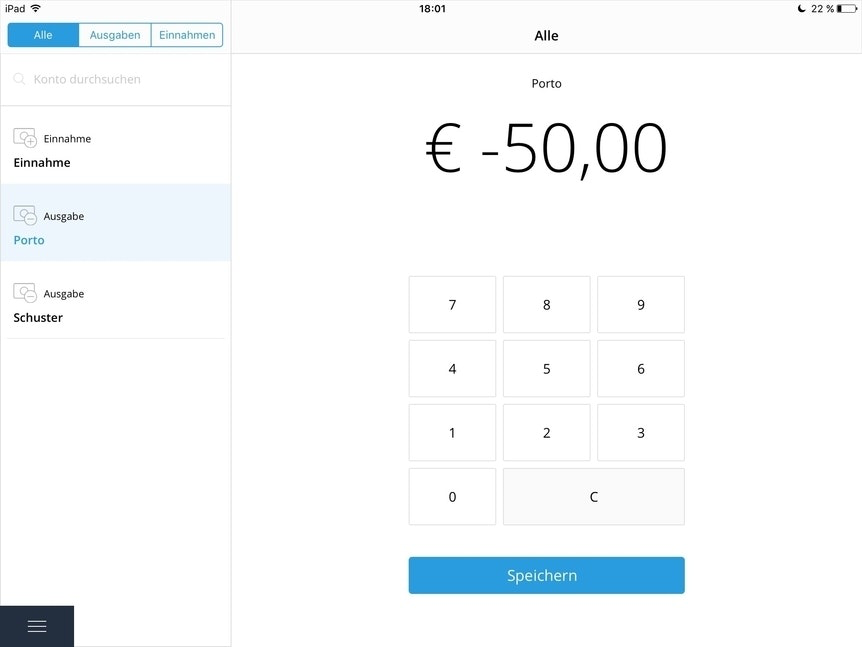
Photo function for cash withdrawals
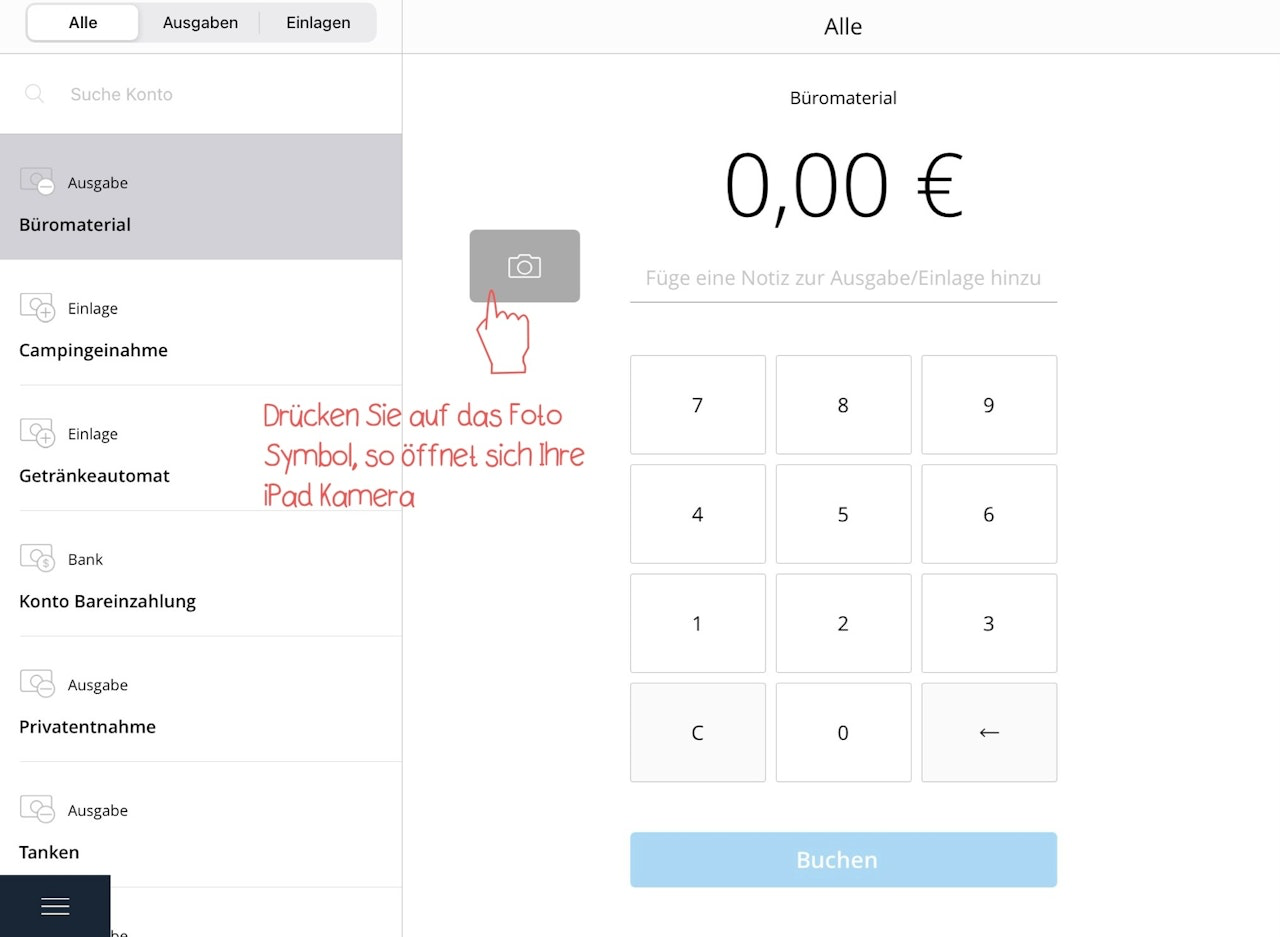
If the photo function is enabled for you, you'll see a camera icon in your iPad under “Deposits/Expenses” (to the left of the amount field). Tap the camera icon to open your iPad camera. You can now take a photo of the receipt for which you're making the expense. After taking the picture, tap “Use Photo” in the bottom right. The image is then saved, which is indicated by the camera icon being replaced by the saved image. Finally, tap “Record.”
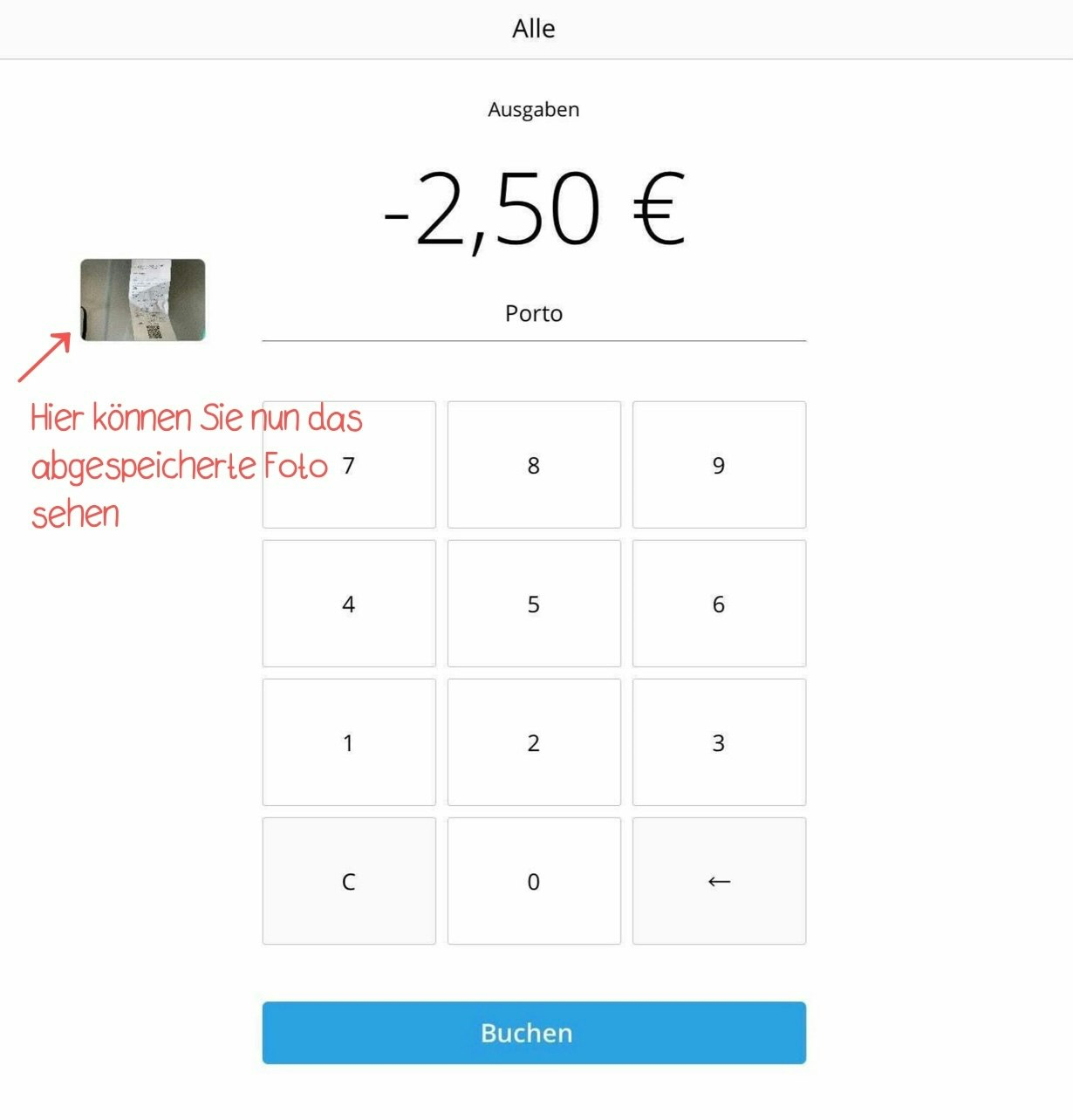
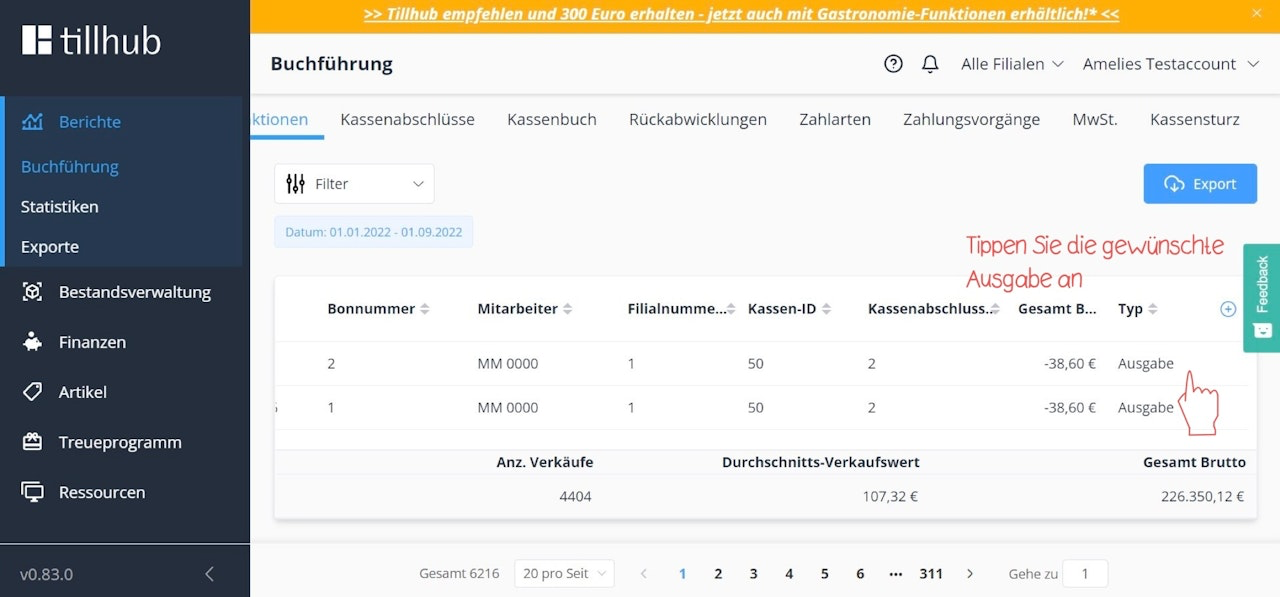
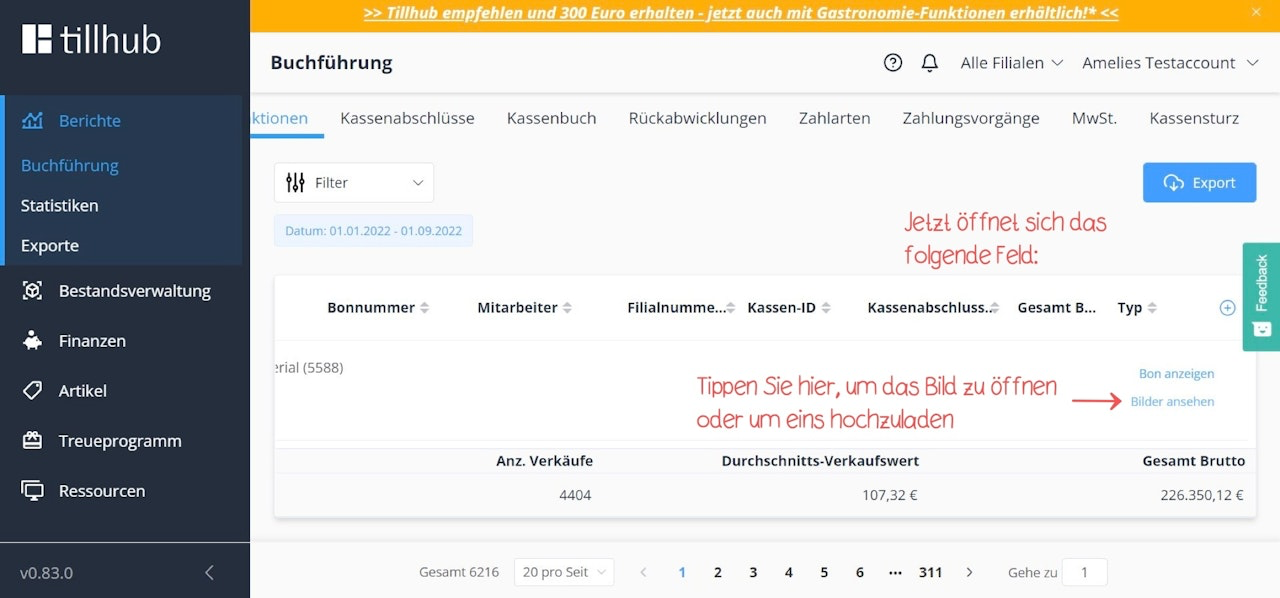
The photo is stored in the dashboard along with the expense entry. You can find it under: Reports > Accounting > Transactions. To view the photo, click “View images” on the right.
Note: We still recommend storing the original receipts along with your expense records separately!
Was this article helpful?
That’s Great!
Thank you for your feedback
Sorry! We couldn't be helpful
Thank you for your feedback
Feedback sent
We appreciate your effort and will try to fix the article